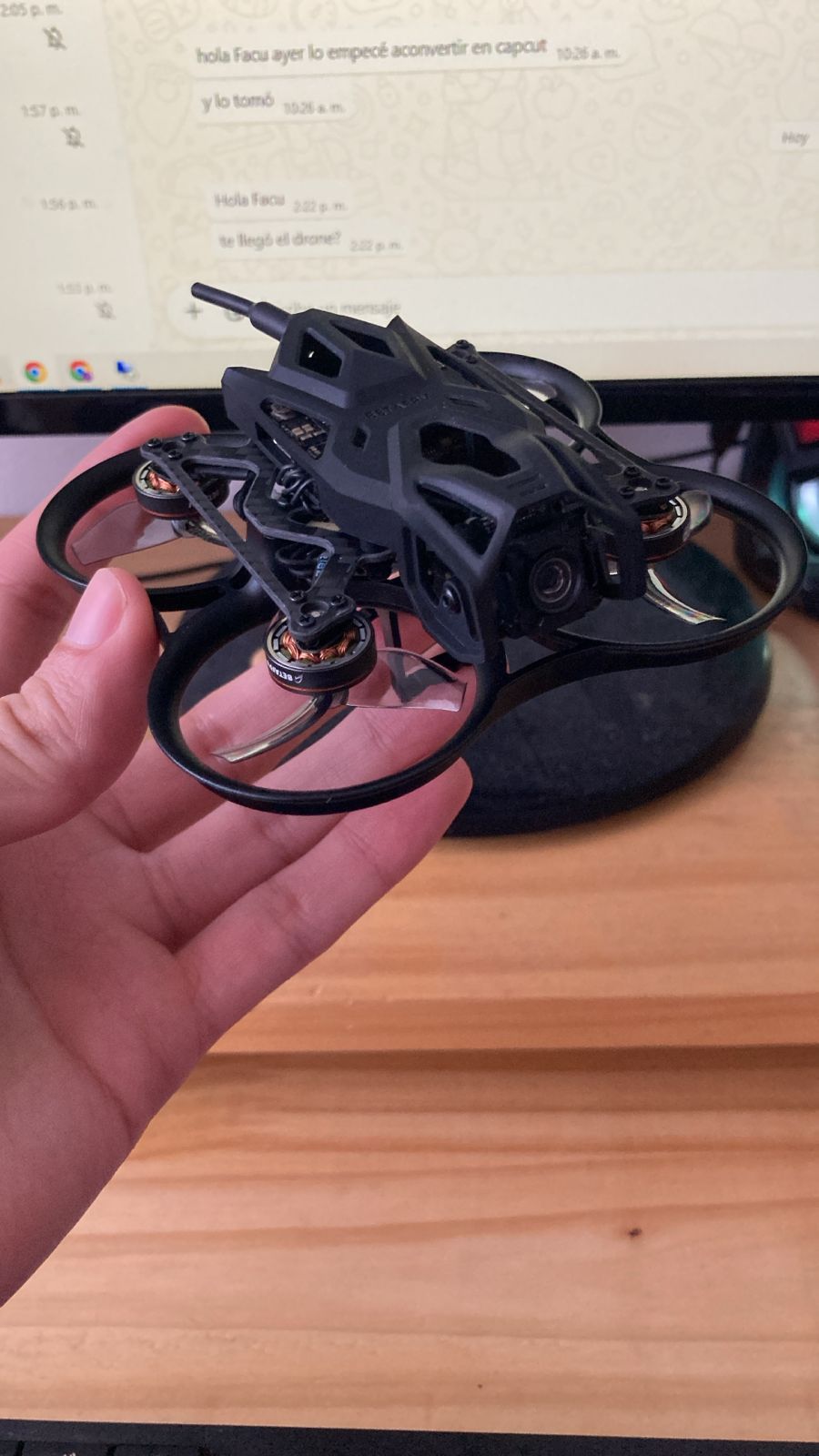
Here’s the uncomfortable truth about flying a drone: the mechanical part is easy. A modern drone hovers itself, holds position with GPS, returns home at the press of a button, and refuses to fly into most obstacles. You can make one float in the air ten minutes after opening the box. Every “how to fly a drone” tutorial that walks you through which stick does what is technically correct and almost beside the point.
The hard part — the part that determines whether your drone is still flying in three years or sitting in pieces in a closet — is everything around the flying. The judgment. The discipline. The conservative habits. The mindset that treats every flight as a small intentional act instead of a chance to impress.
I learned to fly in 2018, and I learned it the slow way on purpose. While other people my age were doing freestyle moves on day three, I was on the simulator, reading manuals, planning every flight like a pilot. It took me longer to fly well. But I also crashed far less, and I learned the thing most pilots skip: the drone doesn’t fly itself, no matter what the marketing says.
Here’s how to actually learn, the way someone whose drone has to survive paid work would teach you.
Two ways to learn — pick the slow one
There are two paths into drone flying, and they diverge on day one.
The fast path: unbox the drone, go to a park, push the sticks around, try to do cool moves, learn by crashing. This is how most hobbyists start. It’s fun. It’s also how most beginner drones get destroyed in the first month.
The slow path: treat the drone like a vehicle you’re licensed to operate. Read the manual. Practice on a simulator before risking real gear. Plan your first flights. Fly conservatively, deliberately, building muscle memory through repetition rather than adrenaline. This takes longer to feel exciting. It produces pilots who don’t crash.
If your goal is to eventually make money with a drone — or even just to keep the one you bought — take the slow path. Every hour you spend being boring and careful in the first month saves you a crashed drone later.
The pilots who learn fast crash fast. The pilots who learn slow keep their drones. Six years in, I have never regretted being the careful one.
Before you fly: the simulator
This is the single most skipped step, and it’s the most valuable.
Buy or download a drone simulator and put in hours before you ever fly the real thing. For GPS-stabilized drones, even a basic simulator teaches you the stick relationships — how the drone responds to inputs, how to make smooth corrections, how to read orientation. For FPV, the simulator isn’t optional at all; it’s where you’ll spend your first 20–50 hours.
The simulator does two things no real flight can do safely: it lets you crash a thousand times for free, and it builds the muscle memory of smooth, deliberate inputs without the cost of a destroyed drone. The pilots who skip the simulator pay the tuition in broken propellers and cracked airframes instead.
A note that’s saved me more than once: don’t fly a simulator with inverted or non-standard controls right before flying real gear. The cross-wiring transfers. My second drone crash happened because I’d spent the previous evening flying helicopters in a video game with reversed controls, and the wrong muscle memory was still in my hands. Match your simulator settings to your real drone, always.
Don’t start with too much drone
A counterintuitive piece of gear advice that matters for learning, not just budget.
Learning to fly on the most expensive, most capable drone is like learning to drive in a full-size pickup truck. It’s not that you can’t — it’s that the size and stakes make every mistake more expensive and more intimidating, which slows your learning and raises your stress.
Start with a drone that’s cheap enough to forgive a crash and simple enough not to overwhelm you. A current DJI Mini is the right answer for most beginners (I make the full case in Best Drone for Filmmaking and on the kit page). Cheap enough that the first crash isn’t a catastrophe, capable enough that the limitation is your skill, not the gear. Learn on that. Upgrade when the drone is genuinely holding you back, not before.
The controls (the easy part, briefly)
Most drones use “Mode 2” controls, which is the standard you should learn:
- Left stick: up/down controls altitude (climb/descend); left/right rotates the drone (yaw)
- Right stick: up/down moves forward/backward (pitch); left/right moves side to side (roll)
That’s it. That’s the whole control scheme. You’ll internalize it in your first simulator session. The reason I’m spending one paragraph on what other tutorials spend entire videos on is that the controls were never the hard part. Knowing when and how gently to use them is the hard part, and that only comes from deliberate practice.
Your first 10 flights: what to actually practice
Don’t practice tricks. Practice fundamentals — the boring skills that working pilots rely on every single job. Here’s the progression I’d give a new pilot, one focus per flight or two:
Flights 1–2: Hover and hold. Take off, climb to a few meters, and just hold position in a controlled hover. Make tiny corrections. Get comfortable with the drone sitting still under your control. Land gently. This sounds trivial. It’s the foundation of everything.
Flights 3–4: Orientation. Practice flying the drone when it’s facing toward you (controls feel “reversed” because the drone’s left is your right). This is where most beginners get confused and crash. Rotate the drone to different headings and practice moving it in a consistent real-world direction regardless of which way it’s pointed. Orientation confusion is a top crash cause — drill it until it’s automatic.
Flights 5–6: Smooth movement. Fly slow, straight lines. Fly gentle arcs. Focus entirely on smoothness — no jerky inputs, no sudden stops. Smooth flying is what separates usable footage from amateur footage, and it’s a learned motor skill.
Flights 7–8: Controlled descent and landing. Practice descending in open space (away from walls — the wall effect is real and it bites beginners). Land on a specific spot. Land gently. Repeat until landing is boring.
Flights 9–10: Combine and read conditions. Put it together — take off, fly a planned path, hold a few positions, return and land. And start paying attention to conditions: wind, GPS satellite count, your surroundings. Begin building the habit of reading the environment, which is the foundation of the pilot stress bar.
After ten focused flights like these, you’ll be a more capable pilot than someone who’s done fifty flights of random stick-pushing. Deliberate practice beats volume.
The mental model: the drone doesn’t fly itself
This is the mindset that underlies everything.
Modern drones do a lot of automatic work — position hold, obstacle avoidance, return-to-home, stabilization. It’s easy to interpret all that automation as “the drone is safe and will protect itself.” That interpretation is how pilots get complacent and crash.
The truth: the automation works most of the time, not all of the time. The safety features work about 80% of the time. The 20% — the thin cable the sensors miss, the GPS that drifts under a bridge, the wind that overpowers the position hold — is where you, the pilot, are the only thing standing between a flight and a crash.
Fly every flight as if the drone has no safety features at all. Then the safety features become a bonus that occasionally saves you, instead of a crutch you depend on.
Working pilots crash less not because they have better drones, but because they never outsource their attention to the automation. The drone is a tool you operate, not an autopilot you supervise.
Pre-flight discipline
The last habit, and the one that most separates working pilots from hobbyists: a pre-flight routine you run every time, regardless of how confident you feel.
Before every flight:
- Check the wind — at ground level and, if you can, look at how trees or flags are moving higher up
- Check the GPS satellite count — wait for a strong lock before relying on position hold
- Inspect the props — seated correctly, no cracks or chips
- Confirm battery levels — the drone’s and the controller’s
- Check the SD card — has space, is actually inserted
- Scan the environment — cables, obstacles, people, animals, escape routes
- Confirm your home point — so return-to-home brings the drone back to where you are
This takes thirty seconds. The reason it matters isn’t any single check — it’s that running the routine every time is what catches the one day something’s wrong. The check that saves you isn’t the one you remember to do because you’re nervous. It’s the one you do because the routine says you do it, even on flight number eight hundred. My third crash happened the one time I skipped a verification step after hundreds of flights without incident. Complacency is the enemy; routine is the defense.
When you’re ready for more
Once the fundamentals are automatic — smooth flying, instant orientation reading, controlled landings, a pre-flight routine you don’t even think about — then you can start adding ambition. Faster movement, more complex paths, tighter shots, eventually specialized work like FPV or commercial inspection.
But notice the order. Fundamentals first, ambition second. The pilots who reverse that order — who chase impressive shots before they’ve mastered the boring basics — are the ones refilling their gear after every other job.
The honest summary
Learning to fly a drone, mechanically, takes about ten minutes. Learning to fly one well — well enough that it survives years of real use and produces work people pay for — takes months of deliberate, conservative, slightly boring practice.
Take the slow path. Use the simulator. Start with a forgiving drone. Drill the fundamentals before the tricks. Treat the automation as a bonus, not a safety net. Run your pre-flight routine every single time.
Do that, and you’ll be the pilot whose drone is still flying in three years — quietly, reliably, paying its way — while the fast-learners are on their third replacement. The drone was never the hard part. You are. The good news is that you’re also the part you can train.