The battery is the part of a drone most pilots understand least and depend on most. It’s the single biggest factor in flight time, it’s the most common cause of a sudden power loss, it’s the only component that can literally catch fire, and it’s the thing airport security cares about more than the drone itself.
The spec sheet — “4S 1500mAh 100C” — reads like noise until you know what each number means. Once you do, it tells you the flight time, the power available, the safety profile, and whether you can legally bring it on a plane. Here’s the whole picture, technical and practical.
Two kinds of drone battery
The first split: intelligent flight batteries versus raw LiPo packs.
Intelligent flight batteries are what DJI and most consumer/prosumer drones use. They’re LiPo cells wrapped in a smart battery management system (BMS) that handles cell balancing, reports state of charge and health, auto-discharges to a safe storage voltage after a few days, tracks charge cycles, and protects against over-discharge. You plug them in, they manage themselves. The price is that they’re proprietary, more expensive, and you can’t service them.
Raw LiPo packs are what FPV builds and racing drones use. Bare cells with a balance lead and a power connector, no BMS, no babysitting electronics. You manage charging, balancing, storage voltage, and discharge limits yourself. They’re cheap, light, deliver enormous burst current, and will absolutely punish carelessness. This is the world of LiPo bags, balance chargers, and storage discipline.
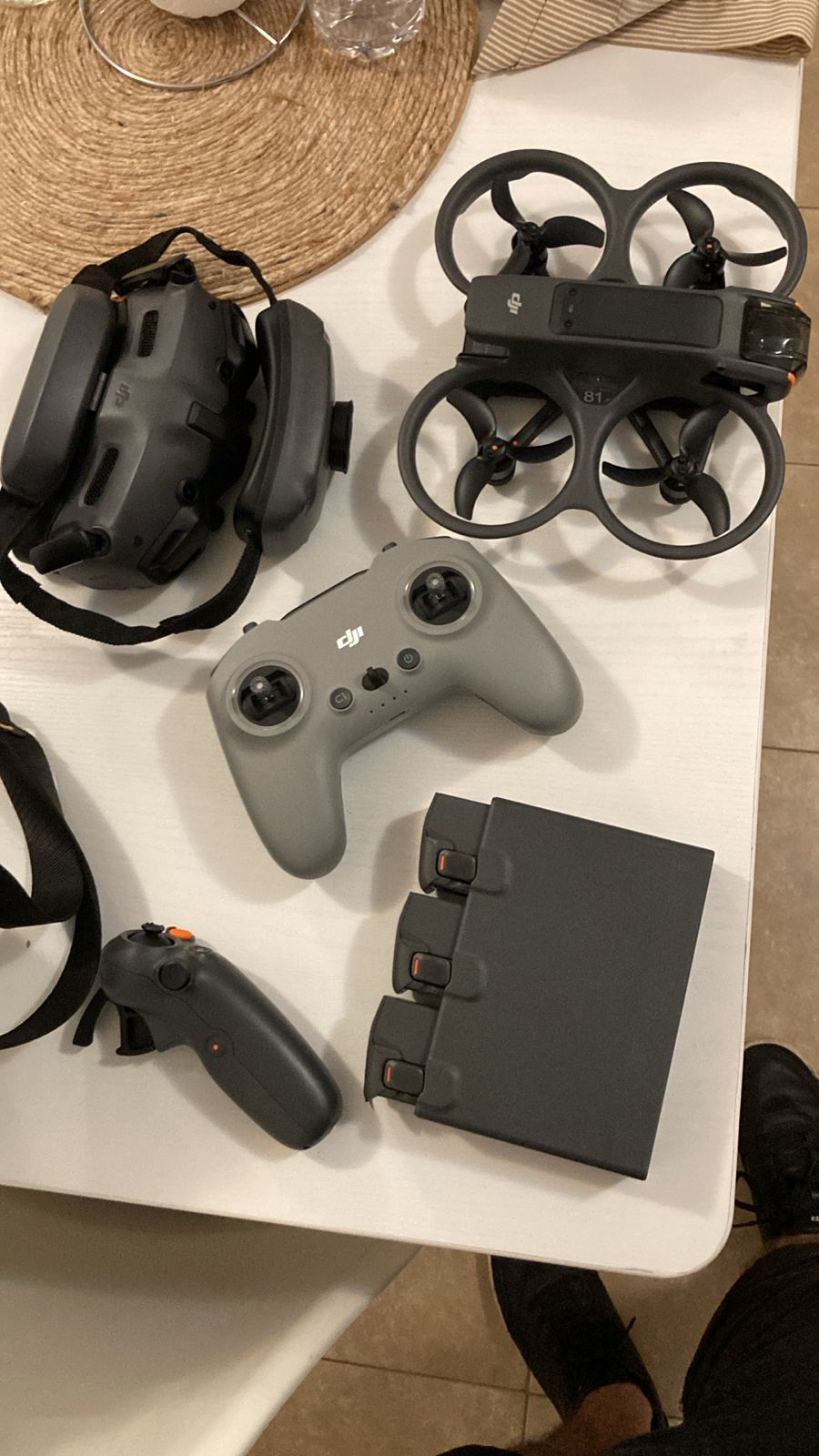
Most readers flying a Mavic, Air, or Mini are on intelligent batteries and can skip the manual management. Anyone flying FPV — like the Pavo 2 work I do — lives in the raw LiPo world and has to understand every number below.
Cell count (the “S” number) = voltage
The “S” in “4S” means cells in series. Each LiPo cell has a nominal voltage of 3.7V (4.2V fully charged, ~3.0–3.3V empty). Wiring them in series adds the voltages:
| Pack | Cells | Nominal voltage | Full charge |
|---|---|---|---|
| 1S | 1 | 3.7V | 4.2V |
| 2S | 2 | 7.4V | 8.4V |
| 3S | 3 | 11.1V | 12.6V |
| 4S | 4 | 14.8V | 16.8V |
| 6S | 6 | 22.2V | 25.2V |
Voltage determines how much power the motors can pull. Higher voltage = more potential power = faster, more aggressive flight. This is why FPV freestyle and racing have largely moved to 6S — more voltage, less current draw for the same power (which means less heat and less voltage sag). Lighter builds and tiny whoops run 1S or 2S. Cinewhoops sit in the middle.
The S-number is voltage, and voltage is power headroom. More cells in series means more power available to the motors — and a heavier, more dangerous pack.
For intelligent batteries, the drone is engineered around a fixed voltage and you never think about it. For FPV, matching the right S-count to your build is a core decision.
Capacity (mAh) = flight time, with a catch
Capacity is measured in milliamp-hours (mAh). Bigger number = more energy stored = longer flight time. A 2200mAh pack holds more than a 1300mAh pack of the same voltage.
The catch: capacity adds weight, and weight costs flight time. There’s a point where a bigger battery weighs enough that the extra energy goes into carrying the extra weight, and total flight time stops improving. Every airframe has a capacity sweet spot. Manufacturers of intelligent batteries have already found it for you; FPV pilots tune it per build.
This is also why a “new battery gives 20 minutes” claim degrades over time — as the battery ages, its effective capacity drops, and so does your flight time. I build that degradation into the battery math for inspection flights and into the amortization logic for working gear.
C-rating = how fast it can discharge
The C-rating is the spec most consumer pilots ignore and most FPV pilots obsess over. It defines how fast the battery can safely deliver its energy.
The math: max continuous current = C-rating × capacity (in Ah). A 1500mAh (1.5Ah) pack rated 100C can deliver 1.5 × 100 = 150 amps continuously.
Why it matters: motors pull huge bursts of current during hard acceleration. If the battery can’t supply current fast enough, voltage sags — drops under load — and you lose power exactly when you’re demanding it (a hard punch-out, a sudden climb). Under-rated batteries sag, overheat, puff, and die early. FPV freestyle and racing need high C-ratings because the current demands are violent. Cinematic flying is gentler on current, so the C-rating requirement is lower.
Intelligent batteries are spec’d with adequate C-ratings for their drones, so you don’t choose. FPV builders choose carefully — too low a C-rating is a real performance and safety problem.
Voltage sag and why “percentage” lies
A LiPo’s voltage isn’t constant — it drops as you draw current (sag) and as it depletes. This is why FPV pilots fly by voltage, not percentage. A pack reading “50%” can sag below safe voltage under a hard throttle punch, browning out the drone mid-air.
Practical floor: don’t take LiPo cells below 3.0V per cell under load, or about 3.5V per cell resting. Going lower damages the cells permanently and shortens their life. Land with margin. The intelligent-battery drones enforce this for you with low-battery RTH and forced landings; raw LiPo gives you no safety net beyond your own discipline and your goggles’ voltage readout.
Watt-hours (Wh) = the number airports care about
Watt-hours measure total energy: Wh = voltage × capacity (in Ah). A 4S (14.8V) 1500mAh pack is 14.8 × 1.5 = ~22Wh.
This is the number that governs air travel, and it trips up traveling pilots constantly:
- Under 100Wh: generally allowed in carry-on without special approval (most consumer drone batteries — Mini, Air, Avata — fall here)
- 100–160Wh: allowed with airline approval, usually limited to two spare batteries
- Over 160Wh: prohibited on passenger aircraft (some larger cinema drone batteries)
Rules: drone batteries fly in carry-on, never checked baggage. Terminals must be protected (tape exposed contacts or use the original case). Discharge to storage level before flying. Always check your specific airline — they vary. This connects directly to the practicalities of traveling with a drone, which I’ll cover in depth separately.
Charging and storage — where batteries are won or lost
LiPo lifespan is determined more by how you store and charge than by how you fly.
Charging:
- Charge LiPo at 1C unless the manufacturer rates it for fast charging (1C = charge current equal to capacity; a 1500mAh pack charges at 1.5A)
- Never charge unattended. This is the rule people break right before the fire.
- Charge on a non-flammable surface, ideally in a LiPo-safe bag, for raw packs
- Balance-charge raw LiPo so all cells stay within ~0.01V of each other
Storage:
- Store LiPo at storage voltage: ~3.8–3.85V per cell, NOT full and NOT empty
- A LiPo left fully charged for weeks degrades and can swell; left fully discharged, it can drop below recoverable voltage and die
- Intelligent batteries auto-discharge to storage voltage after a few idle days — this is a real feature, let it work, don’t keep topping them up “to be ready”
- Store cool. Heat is the enemy of every lithium chemistry.
Cycle life: a healthy LiPo lasts roughly 150–300 charge cycles before capacity degrades meaningfully. Intelligent batteries report their cycle count and health percentage — check it. A battery past ~80% health shouldn’t fly paid work where you’re counting on the rated flight time.
Safety — the part that’s actually dangerous
LiPo is the only component on a drone that can hurt you badly. Respect it:
- A puffed/swollen battery is retired. Immediately. Swelling means internal damage and gas buildup. Do not charge it, do not fly it. Discharge and dispose.
- A punctured LiPo can ignite within seconds. This is the real risk in a crash — a hard impact that punctures a cell. After any significant crash, inspect the battery before the next flight.
- Never charge a battery that’s hot from flight. Let it cool to ambient first.
- Disposal: fully discharge (saltwater soak for raw LiPo, or run it down), then recycle at a battery facility. Never bin a charged LiPo.
- Fire response: a LiPo fire is a chemical reaction that doesn’t need oxygen the way normal fires do. Sand or a Class D approach, not water on the cells. Prevention (don’t charge unattended, retire damaged packs) beats any response.
I’ve never had a battery fire, and the reason is boring: I charge attended, store at storage voltage, retire anything that puffs, and inspect packs after crashes. The discipline is the whole game.
What this means for a working pilot
Stripped to the practical:
- Flying DJI/intelligent batteries: the BMS handles most of this. Your job is to check battery health percentage, store at storage voltage (let auto-discharge work), don’t fly degraded packs on paid jobs, and follow airline rules when traveling.
- Flying FPV/raw LiPo: you’re the BMS. Match S-count and C-rating to your build, fly by voltage not percentage, balance-charge attended, store at 3.8V/cell, retire puffed packs, and treat every pack as a potential fire you’re choosing to prevent.
The battery is the one component where carelessness has consequences beyond a lost drone. Learn the numbers, respect the chemistry, and it becomes the most predictable part of your kit instead of the most dangerous.
The spec sheet was never noise. It was the whole story, written in shorthand.