For the first three years I worked weddings, I charged the drone as a separate line item. Couple wants the aerial shots? That’s an extra. No drone? The base package stays the same. It made sense to me at the time. The drone was expensive. It needed to pay for itself. It was a different piece of work — different gear, different setup, different risk.
After more than 150 weddings, I don’t do that anymore. The drone isn’t a separate service. It’s a tool, like my gimbal or my second camera body. And once I started thinking about it that way, three things got better: the math, the pressure, and the actual films I was making.
This is the part nobody tells you when you buy your first drone for paid work. So here’s the long version.
The original setup (and why it sounded right)
If you fly drones for clients, you’ve probably been told the same thing I was: charge it as an upgrade. Add it to the package as a line item. Let the couple decide if they want it.
There’s a clean logic to that. The drone costs money — gear, batteries, ND filters, the simulator hours, the insurance you may or may not have. The aerial shots add real value to the film. So if a client wants them, they pay.
That logic falls apart the first time it rains.
Picture this. You’ve sold a wedding package that includes “aerial coverage” as a $400 add-on. The day comes. It rains all morning. The ceremony is moved indoors. The reception is in a hotel ballroom. The only outdoor moment is a five-minute photo session where the wind is at 25 km/h and the clients want to keep moving. There is no good drone shot to be had. You couldn’t use it without spoiling the moment, and even if you tried, the footage would be bad.
What do you do?
Three options, all bad:
- Fly anyway, deliver mediocre footage, and hope the couple doesn’t notice.
- Don’t fly, refund the $400, and look unprofessional in the process.
- Don’t fly, deliver without it, and hope the couple doesn’t ask.
I’ve been in all three positions. None of them are good.
The deeper problem isn’t the rain. The deeper problem is that the moment you sold the drone as a service, you committed to using it — even when the conditions tell you not to. Your contract is no longer “I’ll deliver a great wedding film.” It’s “I’ll deliver these aerial shots, specifically.” That changes everything about how you behave on the day.
The carpenter and the hammer
There’s a metaphor I keep coming back to. A carpenter walks into a workshop with a brand new drill. He’s been wanting that drill for months. There’s a piece of furniture on the bench that needs fine detail work — small joints, careful finishing.
Does he use the drill? No. He uses a hammer, or a chisel, or whatever the work actually calls for. The drill is for other things.
The carpenter doesn’t bill the client per tool. He bills for the finished piece of furniture. The client doesn’t ask “are you going to use the drill on my chair?” because the client is paying for the chair, not for tool selection. Tool selection is the carpenter’s job.
A drone in wedding work is the same. The client is paying for the wedding film. Not for “aerial coverage.” Tool selection is your call, and it should depend on what the moment needs.
The drone is part of the work, the way an effect in After Effects is part of the work. You don’t itemize compositing. Don’t itemize the drone.
If you treat the drone like a separate service, you’re asking the client to do your job — to decide which tool you should use. Which they can’t decide, because they aren’t filmmakers. So they default to “yes, more is more, give me everything.” And then you’re committed to using a tool you might not need.
What changes when you stop charging it separately
Three things, all of them improvements.
The pressure goes away. When the drone isn’t sold, you fly when it makes sense and you don’t fly when it doesn’t. The bride starts walking down the aisle and the wind picks up? You skip the drone shot, use the gimbal for the wide, and nobody loses anything. The contract is intact. The film is still great because you used the right tool. The day of a wedding is stressful enough — removing one source of “I have to deliver this specific deliverable” gives you back creative judgment when you most need it.
The math actually gets better. This was counterintuitive to me. I assumed I was leaving money on the table by not charging the drone separately. What I found across a year of bookings was the opposite. When I rolled the drone into the base price, my packages got more expensive overall, but I closed more weddings. Couples don’t comparison-shop on line items. They compare total prices and gut feeling about you. A clean package at one number reads differently than a base price minus four hundred with a “drone upgrade four hundred” tacked on.
I’m not saying every studio should bake in the drone cost the same way I did. I’m saying that “drone as separate line item” is rarely the most profitable structure once you actually run the numbers across a year — you’ll be surprised how often you sold the upgrade and then had a bad weather day or a venue that wouldn’t allow flight, and how that cleans up your accounting in ways you don’t notice month to month.
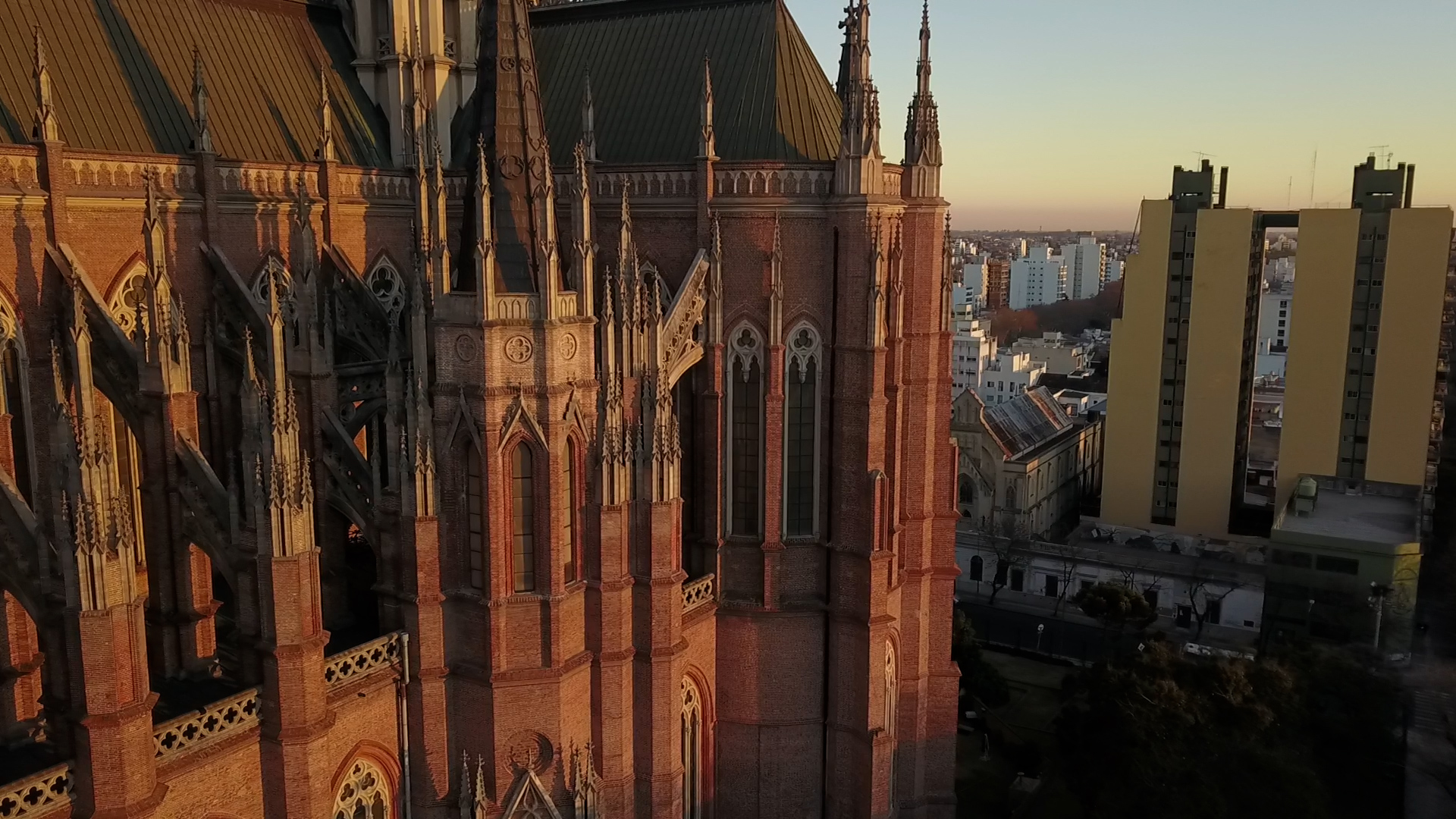
The work gets better. This is the one nobody talks about. When the drone is optional, you bring it out only when the location and conditions deserve it — an old church with great architecture, an outdoor ceremony with a landscape, a wide reception with fireworks at the end. When the drone is mandatory because someone paid for it, you bring it out for first-look photos in a parking lot because you have to. You can guess which footage ends up in the final edit.
What a drone is actually for at a wedding
Once the drone stops being a service, you can think clearly about what it’s actually for.
A wedding is not a piece of cinema. It’s coverage. You are the photojournalist of someone’s most emotional day. Your job is to disappear, capture the moments, and stay out of the way of the event. The drone is the loudest, most attention-grabbing tool in your kit. It’s the enemy of disappearing.
So here’s the rule I follow now, and it’s served me well:
Drones are for general and aerial context shots only. Never for the moments themselves.
Use the drone for:
- A slow 360 of the venue at golden hour, before guests arrive
- A wide aerial of the ceremony space from above, during a calm moment
- The reception location at night with lights on, after the couple has left
- An overhead of the dance floor — briefly — when the music gives you cover
- An establishing shot of the city or landscape if the wedding is destination
Don’t use the drone for:
- Walking down the aisle (your gimbal does this better and quieter)
- The kiss
- The first dance up close
- Any speech or quiet moment
- Anywhere children or elderly guests are nearby
- Indoors, almost ever
If you find yourself bringing the drone down to head-level to “get a really cinematic shot of the first kiss” — stop. That shot exists. It is better with a stabilized handheld. You’re putting people at risk for a shot that another tool does better and more quietly.
No drone shot — and I mean no drone shot, not the most beautiful one you can picture — is worth the risk of injury at a wedding. If you can’t say that out loud and mean it, you haven’t shot enough events yet.
The opposite case: real estate
This rule of “fold the drone into the base price, my call when to use it” reverses entirely in real estate work, which is the other commercial niche I fly in. There, you charge the drone separately. Because the client is different.
Real estate clients — agents, developers, owners of premium properties — are sales professionals. They negotiate for a living. They understand the drone as a competitive upgrade, not as part of your craft. They know aerial shots help a listing close. They expect to pay for that, and they will.
The same line-item that hurts you in weddings helps you in real estate, for the same reason: the client is making the call. In a wedding, you don’t want the client micro-managing your tool choices. In real estate, the client is buying specific outputs and is already comparison-shopping line items. The drone goes in the price sheet, separate, and you hold the line on the number.
I’ll write a separate piece on real estate drone pricing. The short version: charge it separately, hold the line, and don’t let agents bundle multiple properties for less.
How I price weddings now
There’s no single answer because every studio is different. But here’s what I do, in case it’s useful.
My base wedding package includes:
- Full ceremony and reception coverage
- Two camera operators
- An edited film, eight to twelve minutes
- A trailer for social
- The drone, used at my discretion
The drone isn’t listed as a feature, the way I might list “two camera operators” or “social trailer.” It’s just there, like a gimbal is just there. If a client asks specifically about aerial shots, I tell them honestly: I’ll use the drone if the venue and conditions make sense. If I don’t use it, the price doesn’t change.
This makes some couples happy (“oh great, drone included”) and confuses others (“but is it included or not?”). Both reactions are fine. The clients who get it are the clients I want.
When I quote, I quote a single number. The number reflects the value of the finished film, not a parts list. If I’m tempted to break it down into line items to justify the price, I take that as a signal that I’m pricing badly — either too high without confidence, or too low and trying to add value through complexity.
A small caveat for people starting out
If you don’t yet have steady wedding bookings, charging the drone as a clear add-on is fine. You’re learning what your work is worth, and itemized pricing is easier to negotiate than a bundled premium. The hard pivot to “drone included, my call when to use it” comes when you have enough bookings that you can afford to walk away from clients who don’t get it.
If you’re past that point and still selling the drone as a separate service, ask yourself this: how many times last year did you fly the drone in conditions that didn’t deserve it, because someone had paid for the upgrade?
That’s the real cost of the line item. It’s not in the invoice. It’s in the films.