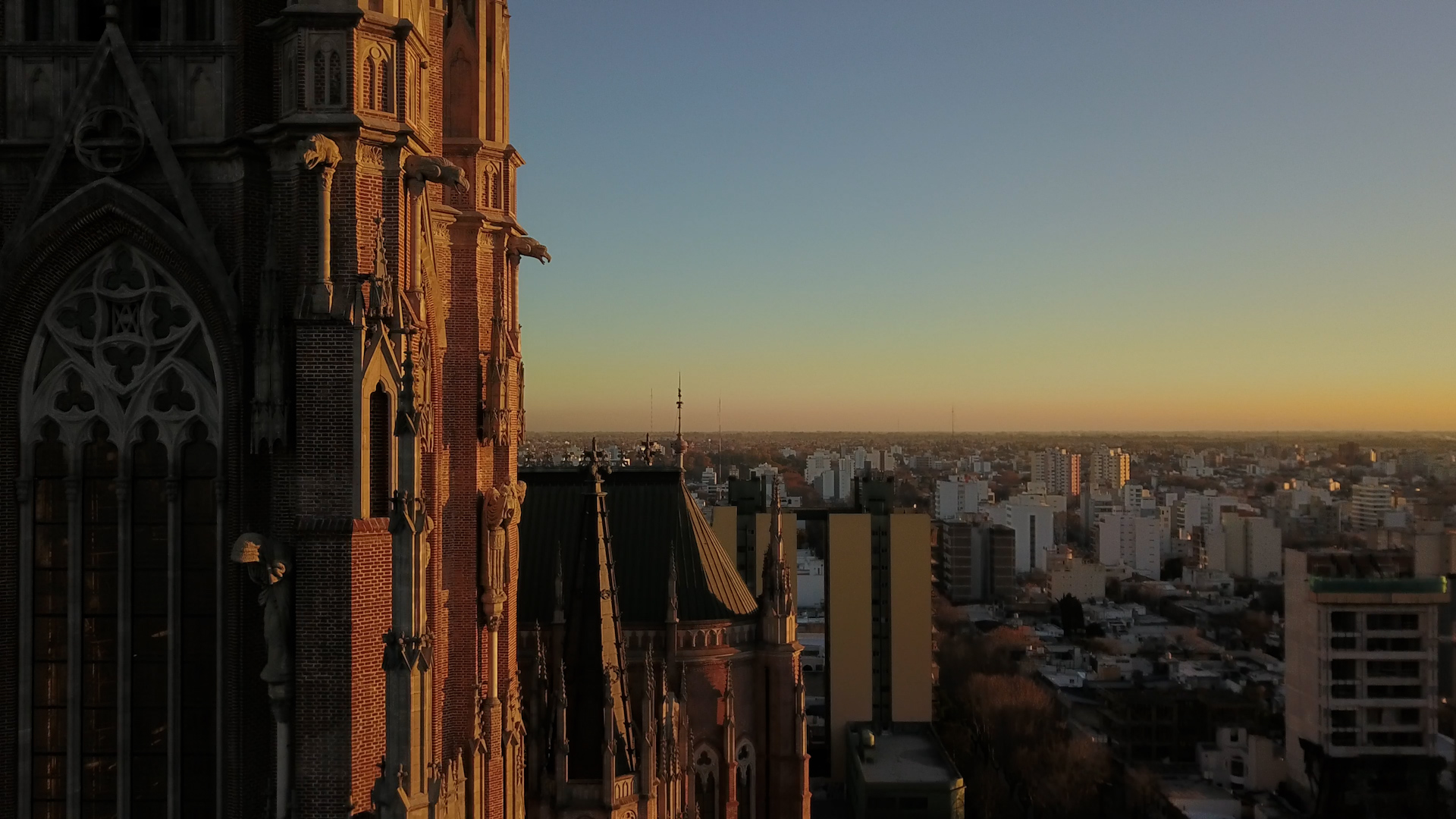
There’s a small ceremony in a vineyard in the province where I work. Late afternoon, golden light, twenty guests, the kind of setup that looks like it was made for a drone. I had the drone in the car, batteries charged, ND filters ready. I never took it out.
The bride had a five-year-old daughter from a previous relationship. The girl was the ring-bearer and was clearly nervous about it. There were three other small kids in the party. The vineyard had narrow stone paths between rows, and the only safe launch zone was behind the ceremony, partially obscured by trees. I would have spent the whole ceremony with one eye on the drone, splitting attention between flying and the actual coverage.
I shot it with two cameras and a gimbal instead. The film turned out great. The couple has watched it dozens of times. Nobody has ever asked why there were no aerial shots.
This is the part of the job nobody puts in a YouTube tutorial. Not the flying — the not-flying.
Your job, not the drone’s job
If you’re filming a wedding, your job is coverage of an emotional event in real time. Not cinema. Not a music video. Not a portfolio reel. Coverage. You’re the photojournalist of someone’s most emotionally exposed day, and the closer you get to invisible, the better the work is.
The drone is the single loudest, most attention-grabbing tool in your kit. By default, it works against the job.
That doesn’t mean the drone never comes out. It means the drone comes out only when the math is clearly in its favor: when the shot it produces is genuinely useful, and the cost in attention, risk, and your own divided focus is genuinely low. If you can’t tell the math is positive, the answer is no.
After 150+ weddings, I have three questions I run every time before a launch. They take five seconds to ask and they’ve kept me from a lot of regrets.
Question 1: Is this a moment, or a transition?
A wedding is built of moments and transitions. Moments are the stuff people will rewatch — the vows, the first kiss, the speech where someone cries, the first dance. Transitions are everything connecting them — guests arriving, the buffet line, the bride walking from the prep room to the venue, the reception filling up.
Drones are for transitions, never for moments. If you’re flying during a moment, you’ve already broken the rule.
The aerial shot of the venue from above? Transition. The wide of the dance floor at 11pm with everyone in motion? Transition. The slow 360 around the property at golden hour before guests arrive? Transition.
The kiss, the speech, the first dance, the toast — those are moments. Different tools. Different distance. Different rules.
If you’re not sure whether something is a moment or a transition, that’s the answer. It’s a moment.
Question 2: Are there people in the launch zone?
This is the question that’s saved me more drones — and more couples’ afternoons — than any other.
A drone needs an open area to take off and land. Open meaning: no people within roughly five meters of the launch spot, no cables overhead, no children running, no pets, no guests with drinks who might wander into the rotor zone while looking at their phone.
At a wedding, this is harder than it sounds. The guests are in motion. The kids are uncontrolled. The waiters are crossing in random lines. The launch spot you scouted thirty minutes ago is now where the bridesmaids are taking selfies.
The right call here is conservative every time:
- If the only safe launch zone is at the perimeter of the event, that’s fine — but plan the flight path so you don’t have to bring the drone back over the crowd to land.
- If there’s no safe launch zone you can establish in under thirty seconds, don’t fly. Period. Use the gimbal.
- If you have to ask someone to move so you can launch, you’re already out of position. The drone is the loudest, the people are the priority. Reset.
Question 3: Can I get the same shot with another tool?
The least obvious question, and often the most important.
A lot of the shots people think they need a drone for are better done another way. The slow approach to the venue from outside? Gimbal walk-in. The intimate aerial of the couple in the field? Gimbal at chest height, slow zoom. The reveal of the dance floor? Slider or stabilized handheld, low to the ground, much more cinematic and less intrusive.
The drone earns its keep when it produces a shot you genuinely cannot get any other way.
Pure overhead aerial of the ceremony space: drone wins. You can’t put a camera 40 meters in the air with a gimbal.
Wide aerial of the property and surroundings at golden hour: drone wins. No other tool reaches.
Walking down the aisle behind the bride: gimbal wins. Quieter, closer, no people in the launch zone, no rotor wash on the dress, no five-year-old looking up confused.
When you ask the question honestly, the drone answers “yes, I’m the right tool” maybe a quarter of the time at a wedding. The other three-quarters, another tool is better.
The temptation: gear lust at weddings
There’s a specific failure mode I’ve watched a hundred filmmakers fall into, including me, early on. You get a new drone. You’re excited about it. You bring it to a wedding and you find reasons to use it, because you want to see what it can do.
Don’t.
A wedding is not a beta test for new gear. The next personal flight is.
If you have new gear, take it out on personal flights, on commercial real estate jobs, on a friend who specifically asked for a sample reel. Get the new-gear hours out of your system before bringing it to an event where someone is trusting you with the most photographed day of their life.
The same goes for new techniques. The kiss filmed from a drone hovering five meters away? You learned that in a tutorial. You haven’t done it cleanly yet. A wedding is the wrong place to find out.
The exception: when conditions perfectly support it
Some weddings are made for drones. Outdoor venue with no overhead obstructions. Small guest count. No children in the launch zone. Calm weather, plenty of GPS, predictable schedule. Couple has explicitly mentioned they love aerial shots.
When all of those line up, fly more, not less. Use the drone for transitions throughout the day. Get the wide that anchors the whole film. Get the overhead of the dance floor at the right moment. The footage will be great.
But notice that this is a coincidence of conditions, not a default. Most weddings don’t line up that way. And the discipline of asking the three questions every time is what lets you take advantage of the days that do.
A small mental checklist before launching
Before every launch at a wedding, this is what I run through. It takes about ten seconds.
- Am I about to capture a moment, or a transition?
- Is the launch zone genuinely clear of people, especially kids?
- Could a gimbal or slider get the same shot, more quietly?
- Am I flying because the shot needs it, or because I have the drone with me?
If the answers all point to flying, fly. If any of them are “well, kind of,” don’t.
The shots you don’t take are invisible. They never appear in the highlight reel and nobody asks about them. The shots you took when you shouldn’t have — those show up. As background noise during a vow. As a pause in someone’s speech. As the moment a five-year-old got scared. As the disaster you spend the next year trying to forget.
The drone is one tool in a kit. The job is the film. Most days, the tool stays in the bag for almost everything. That’s the rule.