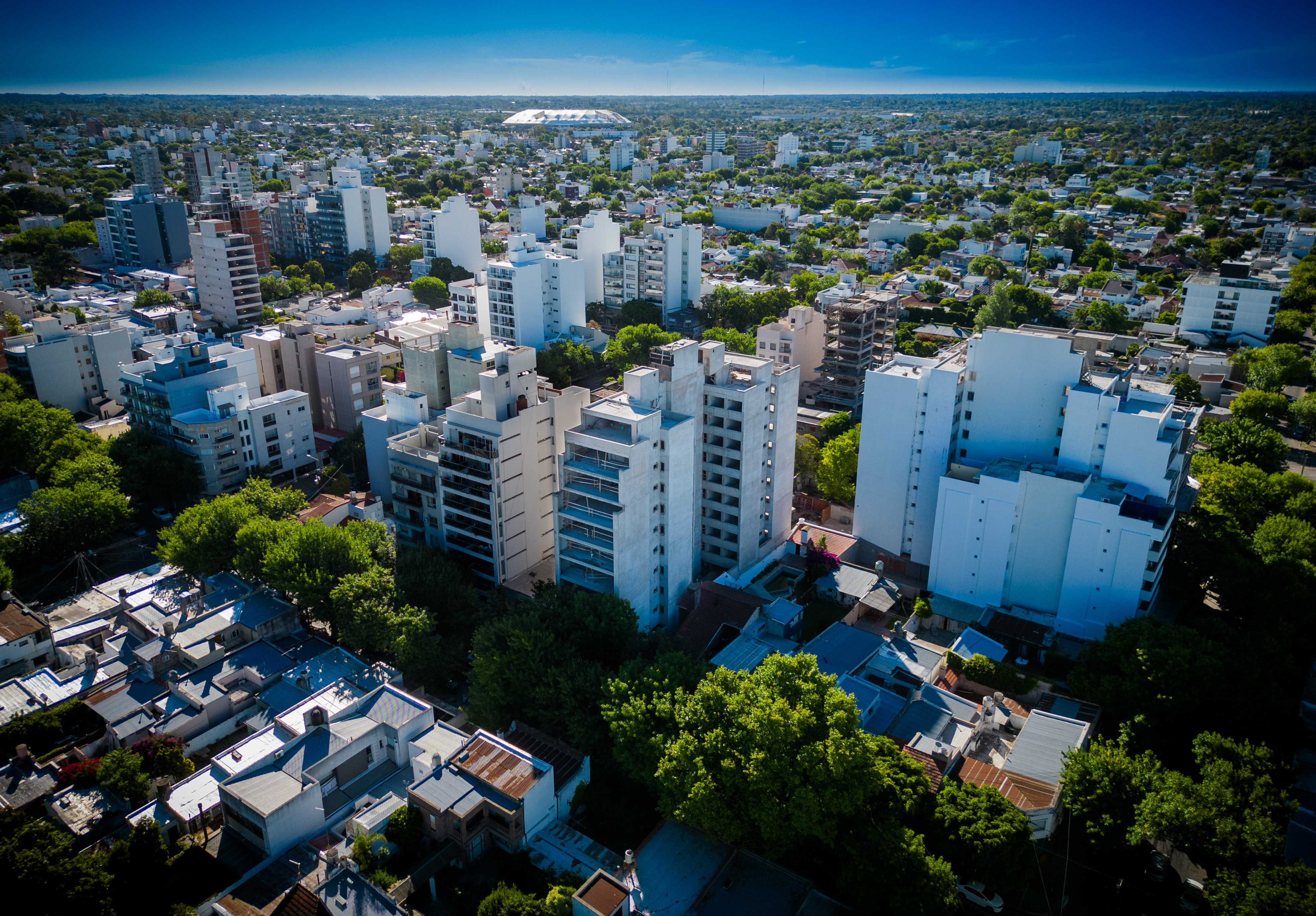
If you fly a drone for paid work, aerial real estate photography is probably the most lucrative niche you have access to without specialized equipment. Single-listing jobs have higher margins than weddings. Repeat agent relationships compound predictably. Per-deliverable pricing is structurally cleaner than per-hour. The work is technically less demanding than wedding videography or commercial cinematic shoots.
It’s also one of the easiest niches to price wrong, and the cost of that mistake compounds across an entire career. Agents anchor pricing across their networks. Once you’ve quoted low for one agent, that number tends to follow you. Once you’ve discounted for one bundle, the next bundle starts from there.
After years of aerial work for residential listings, premium properties, private neighborhoods, and developer projects across Buenos Aires, here’s the pricing structure that actually holds up — and the reasoning behind every part of it.
The mental shift: price it as photography, not as drone
The most common mistake I see in beginner aerial real estate work: pricing the drone as a separate technical service. “My drone fee is X. My photography fee is Y. Together, the package is X+Y.”
That structure costs you money for two reasons.
First, agents see drone fees as a discrete line item that’s negotiable. They’ll push back on the drone fee specifically while leaving the photography fee untouched, because the drone fee feels like “the optional upgrade.” Even when you’ve sold the work as integrated, that line-item visibility erodes your margin.
Second, the actual value of aerial real estate work is in the photographs and video themselves — composition, light, edit quality — not in the fact that they were shot with a drone. Pricing it as photography lets you charge what the deliverable is worth, not what the gear costs.
Don’t sell drone hours. Sell finished aerial photography. The photography is what closes the listing.
This is the opposite of my wedding pricing rule, where I argued against charging the drone separately. The two niches require opposite tactics for the same underlying reason: in weddings the client doesn’t understand drone work and shouldn’t be making tool decisions; in real estate the client absolutely understands the marketing value of aerial shots and is comfortable paying for them as a discrete deliverable.
The shift is from “drone fee” to “aerial photography package.”
The three-tier pricing structure
Here’s the structure I use, which travels well across markets. Adjust the absolute numbers to your local market — the relative spacing between tiers is what matters.
Tier 1: Standard residential listing
The bread-and-butter offering. Suitable for most single-family homes, apartments, and standard commercial listings.
What’s included:
- 1 site visit, weather-windowed (you reserve the right to reschedule for safety)
- 5–8 edited still aerial photographs at high resolution
- 1 short edited aerial video (15–30 seconds, music optional)
- Standard turnaround (48–72 hours after the shoot)
- Single-property scope
What’s excluded:
- Interior coverage
- Walk-throughs
- Same-day rush turnaround
- Multi-property bundles
- Re-shoots due to weather changes after delivery
This is your floor price. It’s what an agent gets when they call and say “I have a listing, what’s your rate?” with no other context.
Tier 2: Premium listing
The upgrade for higher-value properties — premium neighborhoods, larger estates, listings that justify additional production effort and aerial coverage.
Includes everything in Standard, plus:
- 10–15 edited stills
- 1 longer edited aerial video (45–90 seconds, with light grading)
- Aerial-to-ground transitions if relevant
- Optional FPV interior pass (priced as a clear add-on — see below)
- Priority scheduling within 5 business days
- One round of revisions
Pricing: typically 1.8–2.5× the Standard tier. The work is genuinely more — more flight time, more shots, more edit time, more communication — but most of the premium captures the higher value of the listing itself.
Tier 3: Project marketing
For developers, neighborhood-scale marketing, multi-property campaigns, or anything that involves multiple flights, multiple locations, or branded content.
Includes:
- Multi-day production scope
- Custom deliverable list (negotiated upfront)
- Branded video, social cuts, web-format and print-format outputs
- Project management overhead
- Possible licensing terms for re-use
Pricing: bespoke per project. Project-tier work is where the high CPCs of real estate keywords actually show up — the budgets for project marketing are 5–10× single listings, and they often come with re-booking potential as the development sells out and new phases launch.
Don’t quote project-tier work the way you’d quote standard listings. The client knows the budget is different. Quoting low is a signal you’re not the right vendor.
The variables that move the price
Within each tier, four factors push the actual price up or down. Understanding these helps you quote consistently and explain pricing decisions when agents push back.
1. Property size and complexity
A 200m² urban apartment is one thing. A 1-hectare countryside estate with a horse ranch and a vineyard is another, even if both are “single listings.” Bigger properties take more flight time, more shot variety, more coverage. Price the upper end of Standard for properties that push the boundaries; quote Premium for properties that genuinely have more to show.
2. Location accessibility
Travel time is real cost. A property 20 minutes from your base costs less to shoot than one two hours away. I add a clear travel surcharge above 30 km, and I’m transparent about it: “My base rate covers properties within X km. Beyond that, travel is added at Y per kilometer.” Agents respect transparent pricing structures and they’ll plan their listings accordingly.
3. Flight conditions
Some properties are technically harder to fly. Tight urban environments. Properties under flight restrictions or near airports. Tree-heavy lots that constrain camera angles. Properties with overhead power lines. These all increase your time on site, your risk, and your post-production effort. They justify a 15–25% premium that should be quoted upfront, not absorbed silently.
4. Turnaround speed
Standard turnaround is 48–72 hours from shoot. Same-day turnaround is its own paid feature. I price rush turnaround at 30–50% above the base rate, and I quote it before accepting the job. “You need it tonight? Sure — that’s a rush surcharge. Standard turnaround on the base price is 48 hours.” Most agents back off and accept standard turnaround when they see the numbers. The ones that don’t are paying for what they need.
Where FPV interior fits
FPV interior fly-throughs — the smooth one-shot tour of a house — are increasingly expected on premium real estate listings. They’re also one of the most overrated parts of aerial real estate work for the average pilot.
The truth: FPV interior is high-skill, high-risk work. The shots take many takes to get right. The post-production is harder than people expect. The drone is operating in close quarters with people, furniture, and homeowner valuables. And in many cases, a stabilized handheld camera with a gimbal will produce a comparable result more safely.
If you offer FPV interior, price it as a clear separate line item — not folded into the package. Charge what the work is worth: in my experience, an FPV interior pass should cost roughly the same as a standard residential listing all by itself, sometimes more depending on property complexity. It’s premium work and the price should reflect that.
Don’t include it as a “free upgrade” in your Premium tier. The minute you do, every agent expects it and the perceived value evaporates.
Recurring agent relationships: the discount that’s not a discount
Most working real estate aerial photographers eventually get into a rhythm with two or three repeat agents. These relationships are valuable — predictable bookings, simpler communication, faster scheduling — and they often come with an implicit pricing conversation.
The trap: agreeing to a “repeat client discount” off your standard rates.
The better structure: a dedicated retainer or volume agreement that exchanges committed monthly volume for a small per-listing reduction. Agents who are willing to commit to N listings per month at a fixed total fee are showing real intent; the discount you give them comes out of their commitment, not out of your margin.
A 10% discount in exchange for committed volume is a deal. A 10% discount because “we’ll do volume” with no commitment is a free hit.
Don’t agree to discounted rates without a written commitment to volume. Many agents understand this and respect it. The ones that don’t were going to underpay you regardless.
The mistake that stops most pilots
Most pilots in aerial real estate work undercharge for years before they realize the floor they should have been pricing from. The reason isn’t mystery. It’s confidence. Pilots who don’t know the value of their work quote conservatively. Conservative quotes set a market anchor that’s hard to move later.
If you’re quoting real estate work today and you’ve never raised your rates, raise them. The agents who valued you at the old rate will mostly still book you at a 15–20% increase. The ones that won’t were going to leave the relationship eventually anyway. Better to find out now.
If you’re new and you don’t know where to start: ask three working pilots in your market, and price at the upper end of what they tell you, not the lower end. The upper end is where the experienced pilots are. The lower end is where the beginners are quoting from confusion. Don’t anchor yourself to confusion.
The work is worth what the work is worth. The aerial real estate niche pays well precisely because the value of the photography is real — listings sell faster, at higher prices, with strong aerial work. You’re charging for that result, not for the drone hours.
Price the result. Hold the line. The math takes care of itself.